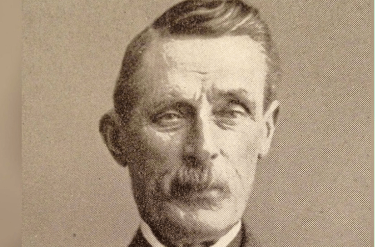
It was one hundred years ago, on 4th April 2025, that the Ulster-Irish Republican and social activist, Louis Smyth, died. He passed on peacefully at the Bridge Hotel, which he owned, in the small town of Portglenone in County Antrim. Louis’s wife of 33 years, Mary, was by his side.
The following link is to a community website that featured an article on Louis Smyth on 13th November 2024. Although such an honourable man, who lived a life of great integrity, deserves greater recognition, this is the best we can do for him. We hope that the future holds more for this humble hero.
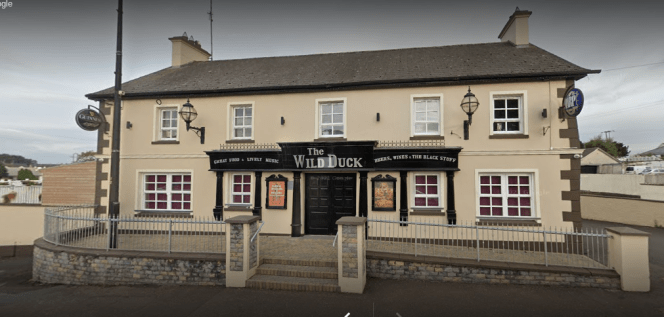
The Bridge Hotel sat upon the banks of the gentle River Bann, and the original building still does. Today, it’s named The Wild Duck and is a popular eatery. The town of Portglenone has seen many changes, as has the town of Magherafelt, 2 miles from where Louis was born. Both were once dominated by Unionism. Union Jacks adorned poles and homes. Red, white and blue was de rigueur. Sectarianism, oppression and discrimination against Catholics and Irish Nationalism was rife. They were tough places to say a Rosary, although the need for those prayers was often great.
Louis Smyth grew up in that terrible era when it was deemed unacceptable, by the state and their proxies, to hold onto a solely Irish identity. It was viewed as seditious to embrace the Gaelic Language and culture. The old ways of Ireland were anathema to a colonial machine that sought to beat and grind the Irishness out of those who refused to yield. Louis Smyth refused. He was one of “that lot.”
That second community, of which Louis held such a prominent role throughout his life, lived beside the first, under their cloying shadow. The smaller tribe, at least back then, held to the Nationalist and Republican tradition. They were almost entirely Catholic. They faced into the paramilitary RUC (“law” enforcement) and the B-specials (A British Army regiment). They stood before a Unionist-controlled judiciary, a Unionist-controlled civil service, a Unionist-controlled government. They remained steadfast against the sectarianism of the Orange Order and the Royal Black and the Apprentice Boys. They gritted their teeth, and clenched their fists, and chose to weather it. The abuse made them strong. It made them determined. It made them sharp.
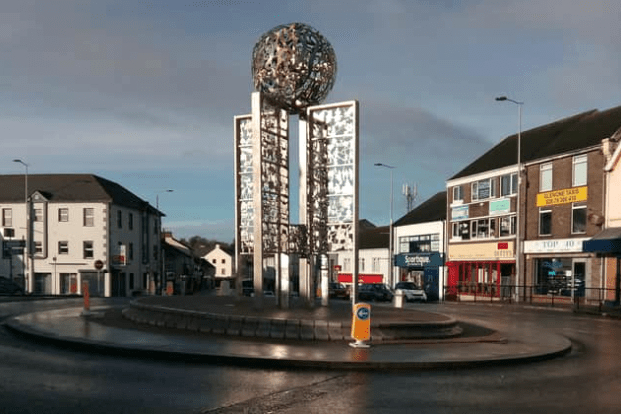
Today, the scene has changed. Both towns now have vibrant, confidence and progressive Catholic and Nationalist populations. The red-white and blue is still there in some places, a colonial reminder even as the tables are still turning, but it’s diluted. The colours have faded, as has sectarian control of the state. The sectarianism and oppression of Smyth’s day, the sneers and snide remarks he endured and which were to continue long after his death, have become a good deal less frequent. Although some older Unionists still hold to those supremacist ways, they are now derided and laughed at, even by their own. Nationalism has grown solidly in confidence, whereas Unionism is now unsure of itself. Magherafelt has been voted one of the best places to live in the north-eastern six counties of Ireland. It has a Catholic and Nationalist majority. Time has changed much.
We can now but wonder at what a man like Louis Smyth would make of it all. British control of Smyth’s part of Ireland still exists, one hundred years after his death. But the trappings of colonialism are falling away, piece by sorry piece. If Smyth had known that events would unfold as they did, would he have fought against the state and its tyranny as he did? Would he have thought 100+ years too long to wait for Irish freedom? Or would he have been more prudent, ready to wait in the certain knowledge that the Union with Britain would end and Ireland would again be free? These are questions that can be asked of many Irish rebels throughout the last 150 years and, perhaps, no one can truly answer those questions save those who are no longer here.
Louis Smyth is not well known. He led a turbulent and active life confronting both social inequality and colonialism wherever he could. He lived in the thick of it. The list of dignitaries that he knew is considerable. Yet, while they have entered into history books and murals and stamps, Louis Smyth’s legacy has remained quietly resting alongside him in the idyllic setting of Ballyeglish Old Graveyard, just outside the village of the Loup, some 4 miles from where he was born. It’s a humble place, and perhaps that appropriate for a country man who lived his life without justified renown.
Bígí linn

